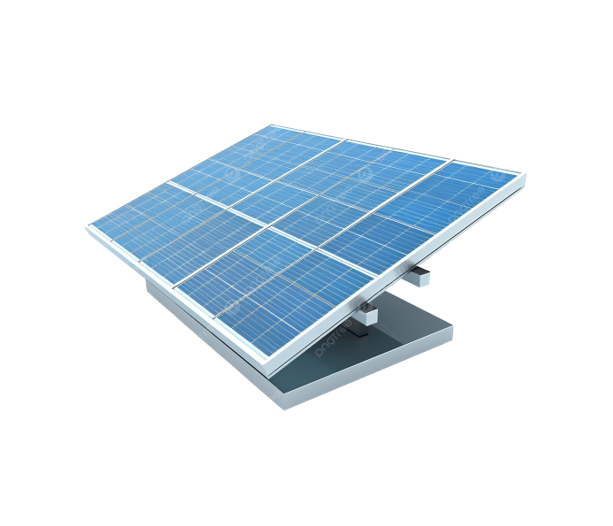
Solar panel
Solar photovoltaic (PV) panels directly convert solar energy into electrical energy through the photovoltaic effect. Made up of several photovoltaic cells, generally based on silicon, they produce direct current (DC) when exposed to sunlight.
The electricity produced can be used directly by electrical equipment, stored in batteries, or converted into alternating current (AC) using an inverter. Panels are therefore an essential component of solar installations, whether they are stand-alone, grid-connected, or equipped with an energy storage system.
To ensure optimal energy production, their selection and installation must take several parameters into account, including power, voltage, current, efficiency, orientation, tilt angle, and environmental conditions. Proper sizing and installation ensure safe, reliable, durable, and high-performance energy production.